Date: 24th June, 2026
Venue: Centre of Excellence in Reproductive Health Innovation (CERHI), Simulation Laboratory, University of Benin
Participants: 113 Medical Students
Introduction
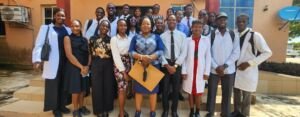
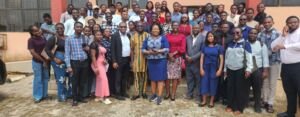
On 24th June 2026, the Centre of Excellence in Reproductive Health Innovation (CERHI), University of Benin, successfully organized a comprehensive simulation-based clinical training for 400 Level and 600 Level medical students at its state-of-the-art Simulation Laboratory. The training was designed to bridge the gap between theoretical knowledge and practical clinical skills by providing students with hands-on experience in a safe, controlled, and realistic learning environment.
A total of 113 medical students participated in the training, comprising 60 students from the 600 Level class and 53 students from the 400 Level class. The exercise exposed students to critical clinical scenarios and enhanced their competence, confidence, teamwork, communication, and decision-making skills in patient care.
Opening Session and Keynote Address
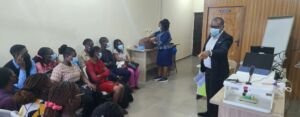
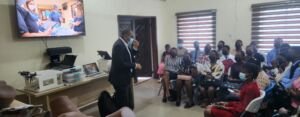
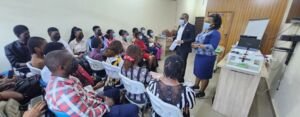
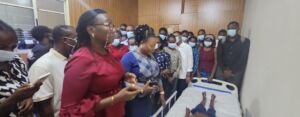
The training commenced with a welcome address and keynote presentation by Prof. (Mrs.) Otaniyenuwa EloghosaObarisiagbon, Centre Leader of CERHI.
In her remarks, Prof. Obarisiagbon emphasized the importance of simulation-based learning in modern medical education. She highlighted that simulation provides students with opportunities to practice essential clinical procedures repeatedly without risking patient safety, thereby improving clinical competence and confidence before real-life patient encounters.
She noted that the rapidly evolving healthcare environment requires healthcare professionals who are not only knowledgeable but also skilled in practical patient management, communication, teamwork, and critical thinking. According to her, simulation training serves as an invaluable platform for developing these competencies while reducing medical errors and enhancing patient outcomes.
Prof. Obarisiagbon further encouraged the students to approach every simulation scenario with professionalism, curiosity, and a commitment to lifelong learning. She commended CERHI’s efforts in advancing innovative teaching methodologies and reaffirmed the Centre’s commitment to producing highly skilled healthcare professionals capable of delivering quality reproductive, maternal, neonatal, and child healthcare services.
Simulation Training Activities
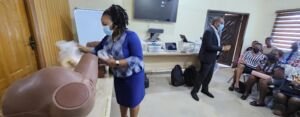
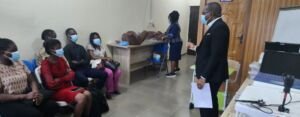
The training featured multiple simulation stations designed to replicate real-life clinical situations encountered in hospitals and healthcare facilities. Students rotated through various stations where they actively participated in demonstrations, hands-on practice sessions, clinical decision-making exercises, and debriefing discussions.
The major simulation scenarios included:
The simulation exercises enabled students to develop practical skills in patient assessment, emergency response, procedural techniques, teamwork, and evidence-based clinical decision-making.
Contributions of Facilitators
The success of the training was largely attributed to the expertise and commitment of the facilitators, who guided students through the various simulation exercises and provided constructive feedback.
Dr. Idemudia Ebenobe
Dr. Maduako Kenneth Toby
Dr. Orhue Michael
Dr. Mokogwu Ndubuisi
Prof. A. I Obi
Student Participation and Engagement
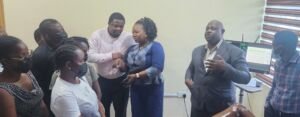
The students demonstrated high levels of enthusiasm, engagement, and professionalism throughout the training. The simulation environment provided a unique opportunity for participants to practice clinical procedures, make decisions under supervision, and receive immediate feedback from experienced facilitators.
Interactive discussions and debriefing sessions following each scenario enabled participants to reflect on their performance, identify areas for improvement, and strengthen their understanding of clinical principles.
Outcomes of the Training
The simulation training achieved several important outcomes, including:
Conclusion
The simulation-based clinical training organized by the Centre of Excellence in Reproductive Health Innovation (CERHI), University of Benin, was a highly successful and impactful educational activity. Through realistic clinical scenarios, expert facilitation, and active student participation, the programmesignificantly enhanced the knowledge, skills, and confidence of the 113 participating medical students.
The Centre Leader, Prof. (Mrs.) Otaniyenuwa EloghosaObarisiagbon, alongside the team of dedicated facilitators, demonstrated CERHI’s continued commitment to excellence, innovation, and capacity building in medical education. The training represents an important step toward preparing future healthcare professionals to provide safe, competent, and high-quality healthcare services to patients and communities.